Travel Guide
Koyasan 3-Day Temple Stay: Japan's Most Sacred Mountain
Want the editable version of this route?
Open the Instaboard template and adapt stops, timing, and notes to fit your trip.
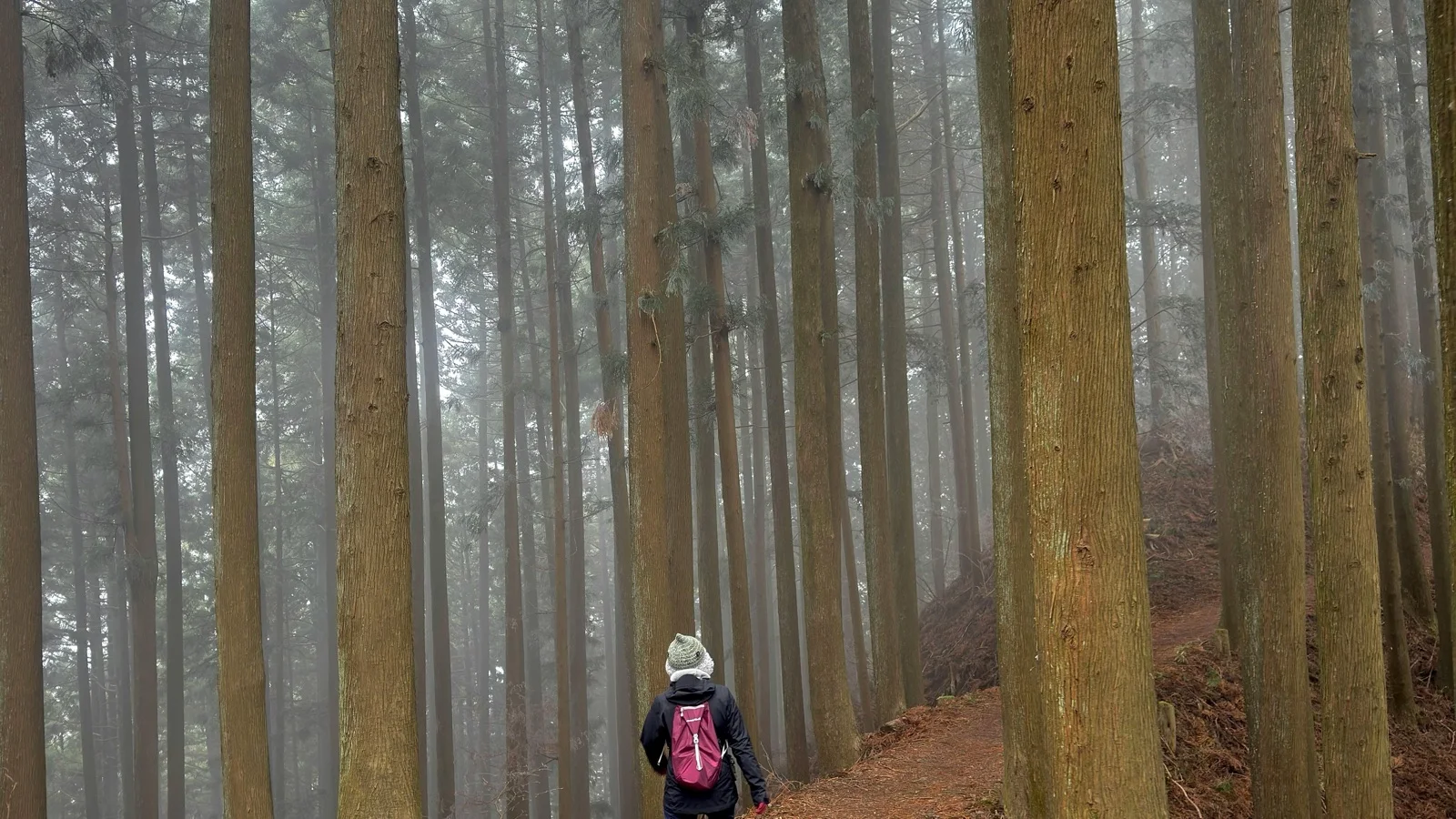
There is a mountaintop in Wakayama where a monk sat down in 816 and basically hasn't moved since, and the entire town that grew around him is still serving him breakfast. Koyasan is small enough to walk end to end, but dense enough that bad timing will cost you the best parts: the dawn cemetery walk, the temple stay, the night tour that rewrites how you think about this place.
Koyasan sits at 800 meters in the Kii Mountains, so it runs cooler than Osaka in every season. Autumn colors hit late October into November, cherry blossoms come mid-April, and winter gives you snow and near-silence.
Day 1
Day one is your arrival. Cable car up through the forest, through the gate that's been guarding this place for centuries, and into the head temple before the day-trippers clear out.
Kōyasan Station
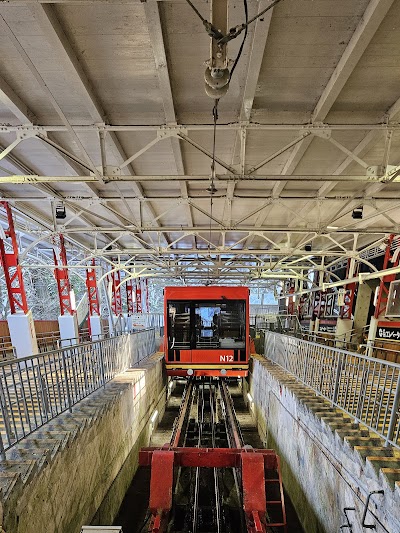
You reach Koyasan by cable car from Gokurakubashi, a five-minute ride that climbs so steeply through the Kii Mountains that the tree canopy drops away below you. Kobo Daishi chose this basin in 816 specifically because it was hard to get to, and the cable car is the modern version of that same idea: you feel the temperature drop and the air thicken as you go up.
Grab a Nankai Koyasan World Heritage Ticket at Namba Station in Osaka because it bundles the train, the cable car, and the plateau buses into one fare. Sit on the left side facing forward for the valley views, and budget roughly 45 minutes for the transfer at the bottom.
Tip: Prebook a Nankai World Heritage Ticket from Osaka to bundle all transit and avoid queues at the transfer point.
Daimon Gate
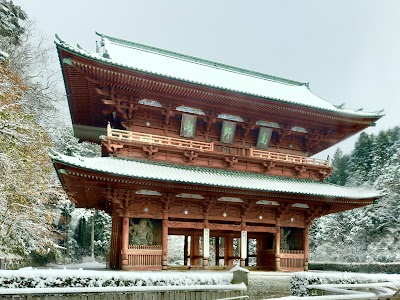
From the bus stop, the Daimon Gate looms ahead: 25 meters of dark wood flanked by two Nio guardian statues, one with his mouth open and one with it closed, marking the boundary between everything outside and this sacred precinct. Those statues are the Buddhist a-un pair, the cosmic breath of beginning and end, and a gate has stood on this spot for centuries.
Don't just walk through and keep going. Turn around and look back at the mountain view framed through the gate, because that's the shot everyone forgets to take. Mid-morning is the sweet spot because the first tour-bus wave clears out by then.
Tip: Arrive late morning to avoid tour bus crowds and get the gate to yourself.
Kongobu-ji
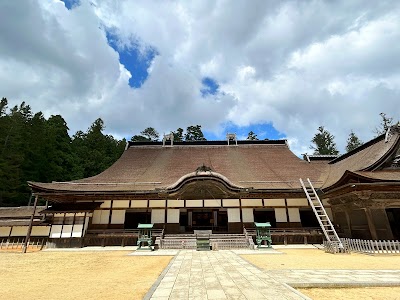
Kongobu-ji is the administrative headquarters of Shingon Buddhism, but it reads more like walking through someone's private art collection: painted sliding screens by Kano Tanyu, then Japan's largest rock garden waiting outside. The Banryutei rock garden covers 2,340 square meters with 140 granite stones arranged as two dragons emerging from clouds, designed to be viewed from inside the building like a painting, not from above.
One of the temples merged to form Kongobu-ji was built by Toyotomi Hideyoshi in 1593 for his mother, and you can still spot the Toyotomi family crest on the grounds. Afternoon works best because day-trippers start heading back down the mountain after two, and the floors get cold on sock feet.
Tip: Check opening hours before you go. The temple closes at 5 PM sharp.
Day 2
Day two is the one you'll remember. A pre-dawn walk through Japan's largest cemetery, the lantern hall where Kobo Daishi supposedly still sits, and the temple complex he designed as a three-dimensional Buddhist cosmos.
Okunoin Cemetery
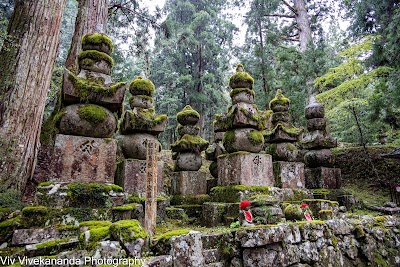
Okunoin is Japan's largest cemetery, over 200,000 moss-covered tombstones packed along a two-kilometer stone path through ancient cedar forest, and it feels more like walking through a cathedral than a graveyard. The graves have been accumulating for about a thousand years because people wanted to be buried near Kobo Daishi, who they believe is still alive in eternal meditation at the far end of the path.
You'll pass a memorial for a pesticide company next to a daimyo's tomb next to a hollowed-out tree with a shrine inside it, and somehow that mix of corporate, feudal, and sacred all makes sense under those cedars. Get here before sunrise with a small flashlight. The lantern-lit walk in half-dark, followed by dawn light breaking through the canopy, is the single most atmospheric thing you can do in Koyasan.
Tip: Arrive before sunrise with a small flashlight for the most atmospheric experience.
Mausoleum of Great Master Kobo Daishi (Buddhist monk Kūkai)
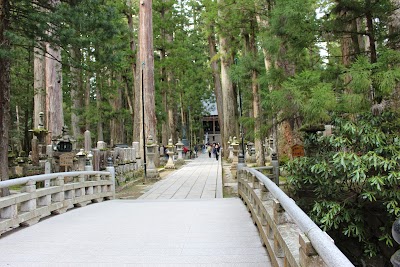
At the end of the Okunoin path you reach the mausoleum where Shingon Buddhism holds that Kobo Daishi has been sitting in eternal meditation since 835, and monks still bring him food twice a day without interruption. The Lantern Hall holds thousands of lanterns, two of which are said to have been burning for over 900 years, and in the pre-dawn dark the whole space glows orange.
The wooden clapper monks strike during prayers echoes back through the trees along the cemetery path, and people tend to speak in whispers here even when nobody's asked them to. Bring cash for incense, take off your hat, and don't photograph inside the inner halls.
Tip: Bring cash for incense offerings and respect the no-photography rule inside the inner halls.
Kongobu-ji Danjo Garan (Elevated Precinct)
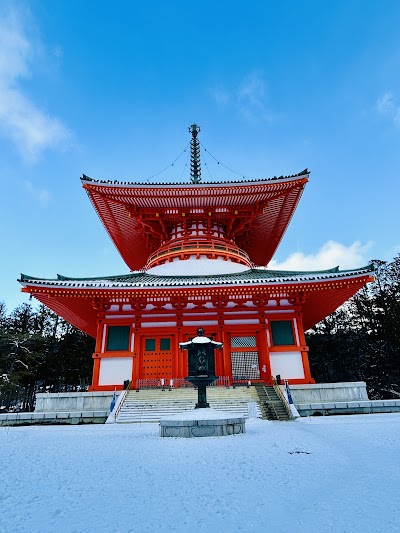
The Danjo Garan is where Koyasan started: Kobo Daishi founded this precinct in 816, and the buildings are arranged as a walkable mandala, a spatial diagram of Buddhist cosmology rather than just a cluster of temples. The Konpon Daito, a massive vermillion two-story pagoda, is the visual anchor, and inside it a three-dimensional mandala represents the esoteric Buddhist cosmos in a way that's hard to forget once you've stood in it.
These buildings have burned down and been rebuilt more times than anyone would like to admit, because wooden structures and cosmic ambition don't mix well with fire. Save this for afternoon because the morning belongs to Okunoin, and you'll appreciate the architecture more once the emotional weight of the cemetery walk has settled.
Tip: Wear warm layers. Koyasan's elevation makes temple corridors noticeably cooler.
Day 3
Day three is the deepening. The museum that holds 21 National Treasures most visitors walk right past, a shogun's mausoleum that barely gets any foot traffic, and then checking into a temple for the night.
Koyasan Reihokan Museum
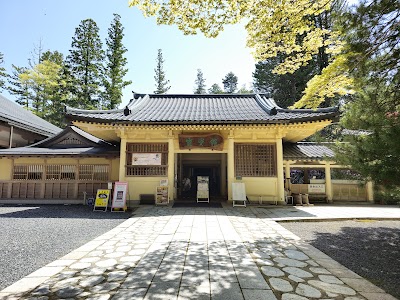
The Reihokan Museum holds 21 National Treasures and 148 Important Cultural Properties: Buddhist statues, mandalas, sutras, all pulled from Koyasan's temple storehouses where some of this stuff sat for centuries. This mountaintop town of 3,000 people has a better art collection than most national museums, and almost nobody goes inside.
It deepens everything you've already walked past for two days: you've seen the temples, now you see what was stored inside them, including objects monks carried back from Tang-dynasty China. Check opening days on the Reihokan website before you go because the schedule is irregular, and showing up to a closed museum after a cold walk is a frustrating way to learn that lesson.
Tip: Buy a combined ticket with Kongobu-ji for savings, and check opening days in advance.
Tokugawa Clan Mausoleum
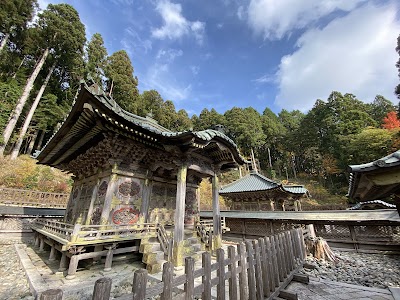
The Tokugawa shoguns ruled Japan for 250 years and built mausoleums to make sure nobody forgot it. Nikko gets the crowds, but this Koyasan complex is the quieter, more intimate version. The contrast is the whole point: Koyasan is about renunciation and monastic simplicity, and then you walk into gold leaf, lacquerwork, and carvings of mythical creatures that broadcast shogunal power for eternity.
It's one of the least-visited major sites in Koyasan, so you'll often have it nearly to yourself, and the carved flowers and birds reward the kind of close inspection you can only do without a crowd behind you. Verify opening hours before heading over because the location is a walk from the center and reservation requirements shift seasonally.
Tip: Reserve extra time to appreciate the intricate carved woodwork details up close.
Eko-in Temple (Pilgrim's Lodging)
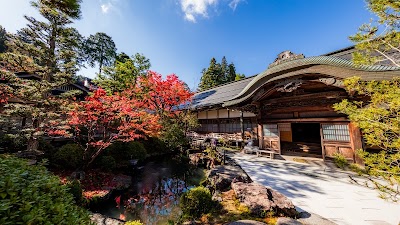
Eko-in is a shukubo, a temple lodging, where you sleep on a futon, eat shojin ryori Buddhist vegetarian cuisine, and wake up to the temple bell at dawn for a fire ritual. The highlight is the guided night walk through Okunoin after dinner, with a monk explaining the graves by flashlight. It's the experience that separates Koyasan from every other temple town in Japan.
You don't need to be Buddhist to stay; you just show up, eat the food arranged on your tray like a small landscape, sit in the shared bath, and let the silence of a temple at night do its work. Book through the Eko-in website well ahead of time, weeks not days, because the good rooms disappear fast during autumn foliage and cherry blossom season.
Tip: Book your stay well in advance for peak foliage and blossom weekends.
What to book ahead
- Reserve shukubo temple lodging (3–6 weeks ahead) - Popular temples like Eko-in and Fukuchi-in fill during autumn and cherry blossom seasons; book via temple website or Japanican
- Purchase Nankai Koyasan World Heritage Ticket (1 week ahead) - Bundles round-trip train + cable car + bus + temple discounts from Osaka; available at Nankai stations or online
- Check Reihokan Museum closure dates (Day before) - Museum closes on select weekdays and between exhibition changes — verify on the official website before visiting
What to pack
Essentials
- Comfortable walking shoes - Okunoin Cemetery path and temple grounds require extensive walking on stone and gravel surfaces
- Modest clothing - Temples require covered shoulders and knees; shukubo lodging has shared bathing areas
- Warm layers - Mountain elevation makes Koyasan 5–10°C cooler than Osaka year-round
- Cash (yen) - Many smaller temples, shops, and offering boxes only accept cash
Nice to have
- Incense sticks - For personal prayers at Okunoin Cemetery and mausoleum shrines
- Light rain jacket - Mountain weather changes rapidly; much of Koyasan is open-air walking
- Slip-on shoes - You will remove shoes frequently when entering temple buildings
Final take
Koyasan is one of those places where the distance between the tourist version and the real version comes down to timing: dawn in the cemetery, night with a flashlight, morning with a fire ritual. None of it is hard to reach if you know what to protect.
Plan this trip
Turn this guide into an editable trip plan
Open the route in Instaboard, adjust the stops, and share the itinerary with your travel group.