Travel Guide
Karuizawa 3-Day Forest + Cafe Escape
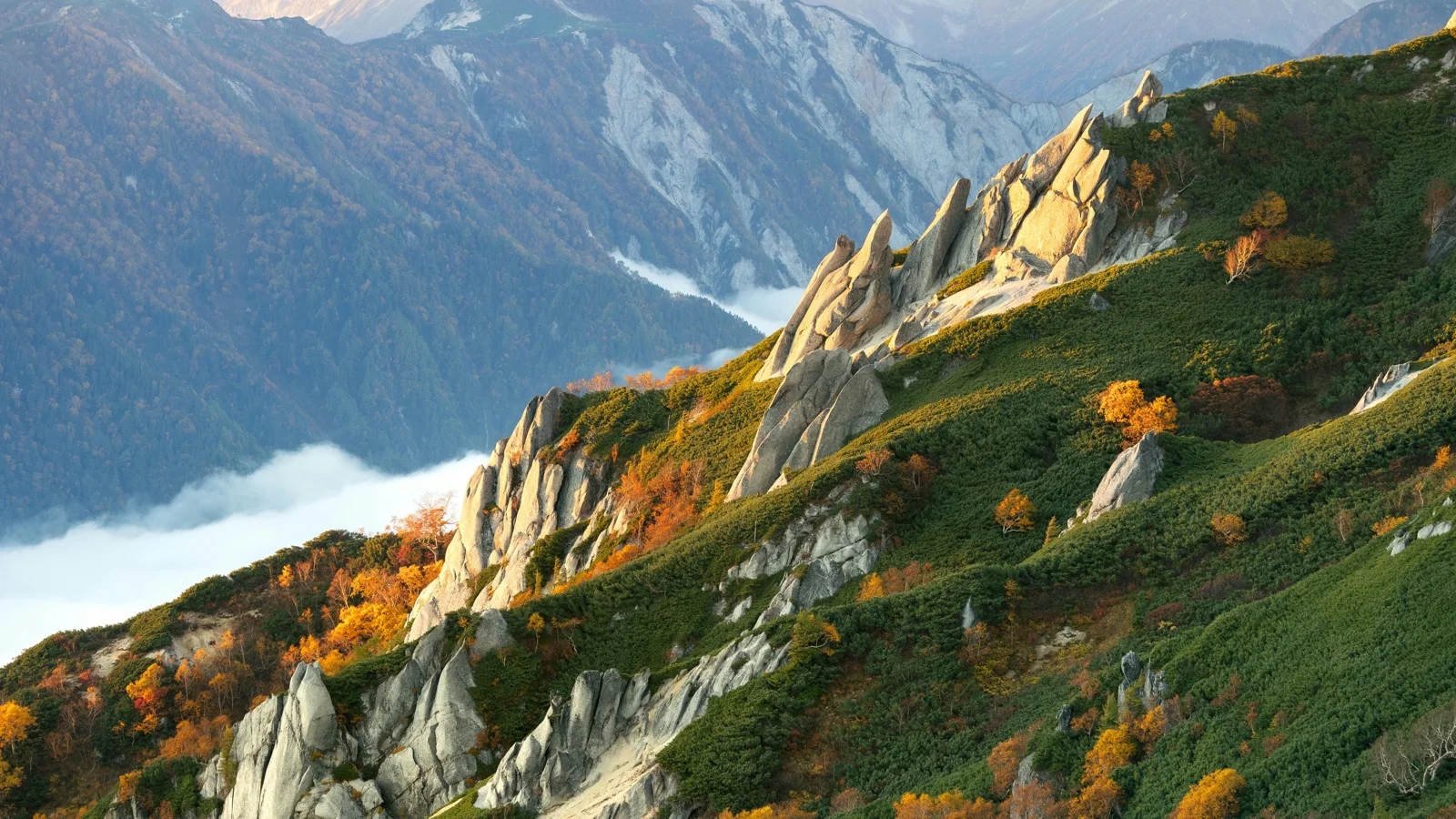
Want the editable version of this route?
Open the Instaboard template and adapt stops, timing, and notes to fit your trip.
There is a town in the Japanese Alps, about an hour from Tokyo on the bullet train, where John Lennon used to walk to the bakery every morning, and a Canadian missionary accidentally invented Japan's fanciest resort because he hated mosquitoes. Three days is enough to feel like you actually saw it, but only if you do not spend all your time figuring out what to do next.
Karuizawa works in every season: cherry blossoms in spring, cool forest air in summer, ridiculous foliage in autumn, snow-covered everything in winter. Whenever you go, the trip still works.
Day 1
Day one is the town itself: cobblestone streets, a mirror pond, and the church that explains why this place even exists.
Old Karuizawa Ginza Street
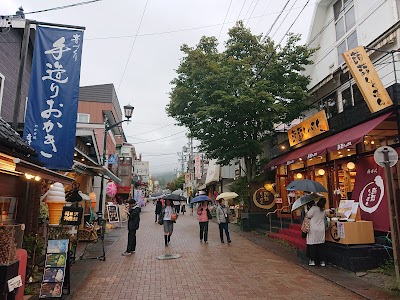
Old Karuizawa Ginza Street is the main drag, a cobblestone lane lined with artisan jam shops, bakeries, and cafes that feels more like a Swiss alpine village than anything an hour from Tokyo. John Lennon and Yoko Ono spent five consecutive summers here starting in 1976, and Lennon walked to French Bakery on this street for baguettes regularly. The founder had been head baker at the Mampei Hotel up the road.
Get here before nine if you want the street at its best. By late morning on weekends the Tokyo day-trippers arrive and the slower pace that is the whole point of Karuizawa kind of evaporates. The jam shops are expensive and 'artisan' gets applied generously. Sample before you buy, and walk the full length slowly because the best places are easy to miss if you are rushing.
Tip: Stroll the cobblestone lanes of Old Karuizawa Ginza Street, browsing jam shops and cafes where John Lennon once walked. Arrive before 10 am to beat the weekend crowds and snag a table at popular bakeries.
Kumoba Pond
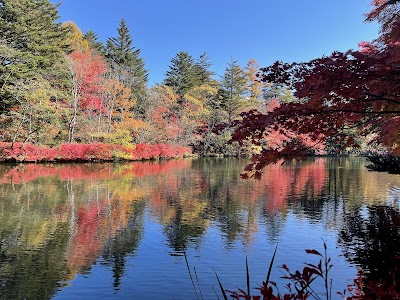
A short walk from Ginza Street, Kumoba Pond is a one-kilometer boardwalk loop around still water that mirrors the surrounding trees. In autumn you see the colors twice, once on the branches and once in the reflection. It is also called Swan Lake, and sometimes actual swans appear, which either makes the nickname feel earned or slightly ridiculous depending on the season.
The boardwalk is flat, shaded, and cool even in midsummer. Budget time for lingering rather than walking, because the full loop is only a kilometer. If the wind picks up the mirror effect vanishes, so early morning and evening tend to give you the best reflections.
Tip: Walk the 1-km boardwalk loop around Kumoba Pond, taking in mirror-still reflections of the surrounding trees. Bring a warm layer as the shaded paths stay cool even in summer; the autumn colours are spectacular in November.
Karuizawa Shaw Memorial Church
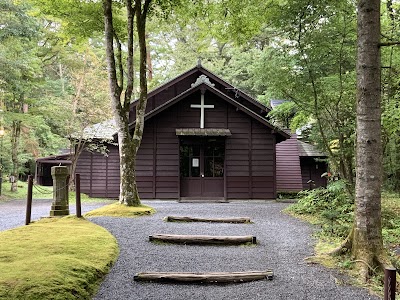
The Shaw Memorial Church is a modest wooden Anglican chapel tucked in the woods. Without Alexander Croft Shaw, Karuizawa is just another mountain town. Shaw discovered this cool highland in 1885, called it 'an outdoor hospital,' and within a decade hundreds of Western expats were summering here. The entire town's identity traces back to one man's desire to escape Tokyo's humidity.
The interior smells like old timber, the light filters through the forest, and it feels more like a New England chapel than anything you would expect in Nagano prefecture. It is free, it is small, and twenty minutes covers it. Check that it is open before you go, because the chapel occasionally closes for private ceremonies without much notice.
Tip: Visit the Karuizawa Shaw Memorial Church, a wooden Anglican chapel built in 1895. Check the opening hours in advance as the church occasionally closes for private ceremonies; entry is free.
Day 2
Day two heads deeper into the nature side: a waterfall that is wider than it is tall, a forest where giant squirrels glide at dusk, and a lunch spot built around a hundred elm trees.
Shiraito Waterfall
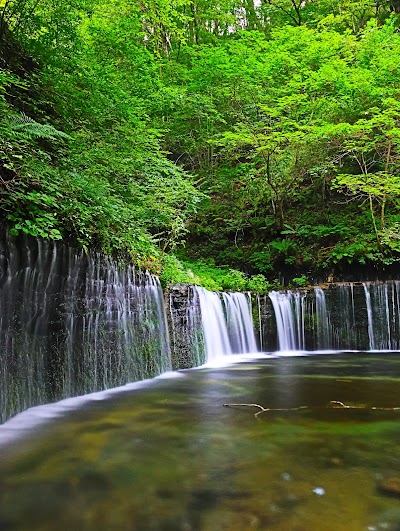
Shiraito Waterfall does not pour over a cliff. Instead, hundreds of thin white streams seep through a curved volcanic rock face, forming a 70-meter-wide curtain that looks like someone left a tap running along an entire hillside. The water is rain that fell on Mount Asama years ago and has been slowly filtering through volcanic rock underground. You are watching ancient rain emerge from stone.
The sound is a soft continuous shushing, not a roar, and mist drifts off the rock face into the surrounding forest. Get here before nine because tour buses arrive mid-morning, and the falls face east so morning light hits the rock face directly. The earlier you are, the fewer people sharing the view.
Tip: Take a bus or taxi to Shiraito Waterfall, a 70-m-wide curtain of white-thread cascades. Arrive by 9 am to photograph the falls without crowds; the short forest walk from the car park is wheelchair-friendly.
Karuizawa Wild Bird Sanctuary
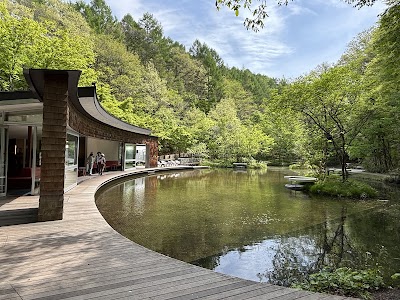
The Karuizawa Wild Bird Sanctuary is a hundred hectares of forest with free walking trails, but the real draw is a wildlife research center called Picchio that runs guided tours to see Japanese giant flying squirrels at sunset. These things are endemic to Japan, roughly the size of a small cat, and they launch themselves from trees and glide using a membrane between their limbs. Picchio tracks individual squirrels and has a sighting rate above ninety percent.
The tour runs about 3,500 yen. Book it at least a day ahead. It only operates roughly March through November because the squirrels, sensibly, are not performing in winter. Even without the tour the morning forest trails are worth the walk: deep quiet, dappled light, and almost no one else on the paths.
Tip: Explore the Karuizawa Wild Bird Sanctuary's free walking trails through 100 hectares of forest. Book the guided flying-squirrel tour at least a day in advance if you want the twilight wildlife experience.
Harunire Terrace
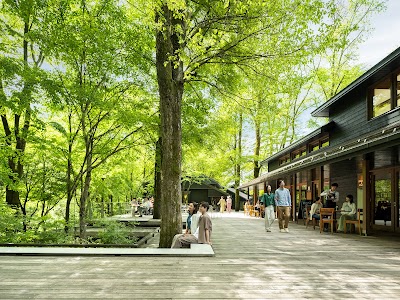
Harunire Terrace is the lunch stop. Nine shops spread across sixteen timber buildings connected by wide wooden decks, all built along a clear stream under a canopy of elm trees. The architecture was designed around the existing trees rather than clearing them, which is why it feels like a small town that grew inside a forest instead of on top of one.
Walk the full boardwalk loop before picking a spot to eat because the best places are not the first ones you see. Bring cash as a backup since a few smaller vendors prefer it. Nine shops go faster than you would expect, so settle in for a long lunch rather than treating it as a full afternoon activity.
Tip: Lunch and browse at Harunire Terrace, where nine timber buildings line a forest stream. Walk the elm-canopied boardwalk between artisan cafes; most shops accept card but a few smaller vendors prefer cash.
Day 3
Day three opens with a mountaintop view where samurai once trudged uphill, then winds down through a Meiji-era hotel and a very convenient outlet mall next to the train station.
Usui Pass Observation Platform
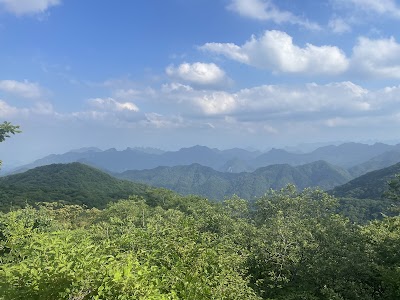
The Usui Pass Observation Platform sits at 1,200 meters, where the old Nakasendo highway, one of the five main roads of Edo-period Japan, crossed between provinces. On a clear morning you can see Mount Asama, an active volcano, and the plains stretching toward Tokyo. Merchants, samurai, and daimyo processions climbed this pass on foot for centuries because it was the inland route between Kyoto and Edo. You can still walk sections of the original cobblestone path.
The pass is exposed and noticeably colder than town, so dress warmer than you think you need, especially in the morning when the air is thinnest but also clearest. Check the weather before committing the trip up here because on a hazy day the view collapses. On a clear early morning you might catch 'unkai,' a sea of clouds trapped between peaks that makes the summits look like islands.
Tip: Drive or take a bus to Usui Pass Observation Platform for sweeping views of Mount Asama and the Gunma plains. Arrive early for the clearest vistas; dress in a warm layer as the pass is exposed.
Historic Mikasa Hotel - c.1906
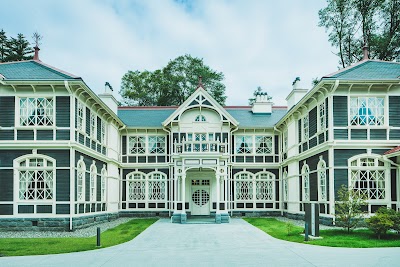
The Historic Mikasa Hotel is a wooden Western-style building from around 1906, designed and built entirely by Japanese architects in purely European style. Not a foreign import but a Japanese interpretation of Western design at a time when that was genuinely cutting-edge. It is an Important Cultural Property now, and the contrast between the European interior (dark wood, high ceilings, the smell of an old library) and the Japanese forest right outside the windows is jarring in the best way.
Thirty to forty-five minutes covers it, because the building itself is the attraction more than any specific exhibit inside. It underwent a multi-year renovation through roughly 2025, so confirm it is open before you visit. Post-renovation museum hours may still be adjusting.
Tip: Tour the Historic Mikasa Hotel, a Meiji-era Western-style property and Important Cultural Property. Entry is a small fee at the gate; check closing days as the museum is sometimes closed on weekdays in winter.
Karuizawa Prince Shopping Plaza
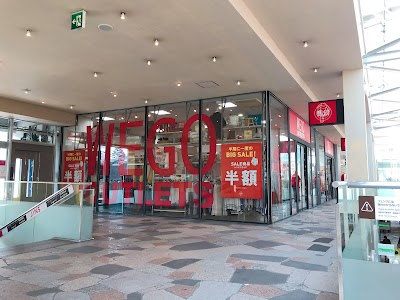
Karuizawa Prince Shopping Plaza is over 200 outlet shops spread across five areas right next to the station. You can literally walk off the train platform and into the stores. Unlike most Japanese outlet malls, this one has walking paths through actual trees between the retail blocks, which makes the shopping feel less like being inside a concrete box and more like wandering through a forest with credit cards.
Bring your passport for the tax-free counter and hit it early if you are buying a lot, because afternoon lines can stretch. The size is deceptive from the entrance. Set a hard departure time so you do not miss your train, because 'just browsing' can easily eat two hours here.
Tip: End your trip at Karuizawa Prince Shopping Plaza, Japan's largest outlet mall beside the station. Show your passport at the tax-free counter and bring a card for smooth checkout between the forested walking paths.
What to book ahead
- Reserve Tonbo-no-yu onsen time slot (1-3 days before) - Weekends and holidays sell out; book via Hoshino Resorts website.
- Book Rogutei Honten lunch (if selecting alternative) (2-5 days before) - Terrace seats are limited; call or book via TableCheck.
- Check Shiraito Waterfall bus schedule (Night before Day 2) - Seasonal buses run infrequently; taxi is a reliable backup from Karuizawa Station.
- Verify Historic Mikasa Hotel opening days (Before trip) - Closes on certain weekdays in winter; confirm on official site.
What to pack
Essentials
- Comfortable walking shoes - You'll cover forest trails, boardwalks, and cobblestone streets each day.
- Light rain jacket or umbrella - Karuizawa's highland climate brings sudden showers year-round.
- Layered clothing - Mountain mornings are cool even in summer; evenings at onsen town drop below 15°C.
Nice to have
- Binoculars - Useful for bird-watching at the sanctuary and scanning Mount Asama from Usui Pass.
- Swimwear and small towel - Required for Tonbo-no-yu and other onsen; some facilities provide towels for a fee.
- Portable charger - Long days of navigation and photography drain phone batteries quickly.
Final take
Three days in Karuizawa and you have walked a cobblestone street that a Beatle knew by heart, stood at a mountain pass where samurai once climbed, and eaten lunch under elm trees that were there before the buildings were.
Plan this trip
Turn this guide into an editable trip plan
Open the route in Instaboard, adjust the stops, and share the itinerary with your travel group.