Travel Guide
Beppu, Japan in 3 Days
Want the editable version of this route?
Open the Instaboard template and adapt stops, timing, and notes to fit your trip.
There's a city in southern Japan where the ground literally boils, steam pours out of the streets, and the whole place smells like sulfur and old money. Beppu has more hot spring water coming out of the earth than anywhere else in Japan, and most first-timers either under-plan it and miss the best stuff or over-plan it and spend the whole trip on a bus.
The trip splits cleanly. Two days of the famous boiling ponds and geothermal spectacles they call the Hells, then a day of mountain views and cooking your lunch with volcanic steam.
Day 1
Day one is the Kannawa neighborhood: cobalt-blue boiling water, a demon that breathes steam, and gray mud that bubbles like something alive.
Umi Jigoku
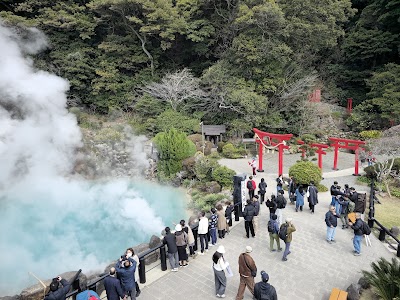
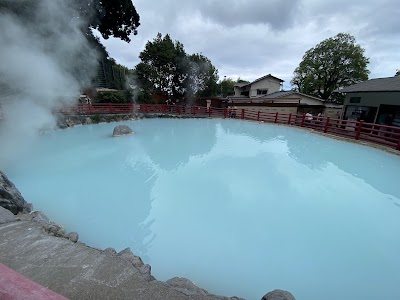
Umi Jigoku is the one on every Beppu postcard, a boiling pond so blue it looks fake, ringed by steam, with water nearly a hundred degrees hot and two hundred meters deep. The word jigoku literally means hell, because ancient locals took one look at the violent bubbling and scalding gas and decided the ground was cursed.
You can't swim in it, can't touch it, can't cook with it. You just stand at the edge and stare, which is honestly the entire business model of the Hell tour. Get here at opening before the tour buses show up, because the blue photographs best in soft morning light and the crowds get thick by mid-morning.
Tip: Arrive early to beat the weekend crowds at this cobalt-blue boiling pond. The botanical gardens and foot bath are included in your entry ticket.
Kamado Jigoku
A few minutes' walk through Kannawa's steaming streets gets you to Kamado Jigoku, where the Hell tour stops being just a spectacle and starts feeding you. The name means cooking pot hell. Locals have been using these geothermal vents as natural stoves for generations, and the food stalls are still doing it.
There's a giant red demon statue that literally breathes hundred-degree steam from its mouth while you eat eggs boiled in hell-steam next to it, which is either atmospheric or aggressive depending on your mood. The jigoku pudding is genuinely good, and the hand and foot baths are free with entry, a warm-up because the Kannawa district is the warm-up for everything else today.
Tip: Grab hell-steamed eggs and snacks from food stalls near the demon statue. Bring cash as some vendors do not accept card payments.
Oniishi Bozu Jigoku
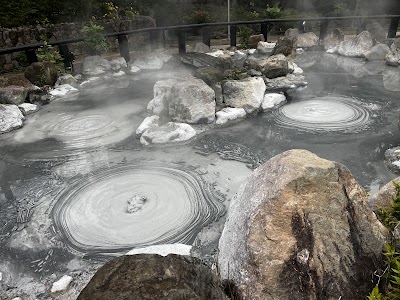
Oniishi Bozu Jigoku is the weird one. No colored water, just gray mud bubbling up in perfect spheres the size of softballs. Someone apparently thought the bubbles looked like the shaved heads of Buddhist monks rising from the earth, and the name stuck.
The sound is what gets me: a deep, rhythmic gurgling, more organic than the hissing steam at the water Hells, almost like the ground is digesting something. The walk here from Kamado through Kannawa's streets is half the experience. Steam vents from grates and drains the whole way, because this whole neighborhood is sitting on top of the same volcanic system.
Tip: Walk from Kamado Jigoku through Kannawa's steaming streets to see the bubbling gray mud pools. Check opening hours before visiting as they close earlier than other hells.
Day 2
Day two heads to Shibaseki for a blood-red mud pond that's been bubbling for a thousand years, a geyser that erupts every half hour, and then you finally get in the water yourself.
Chinoike Jigoku
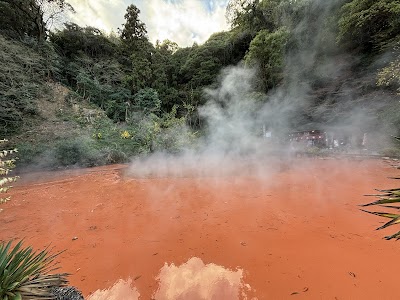
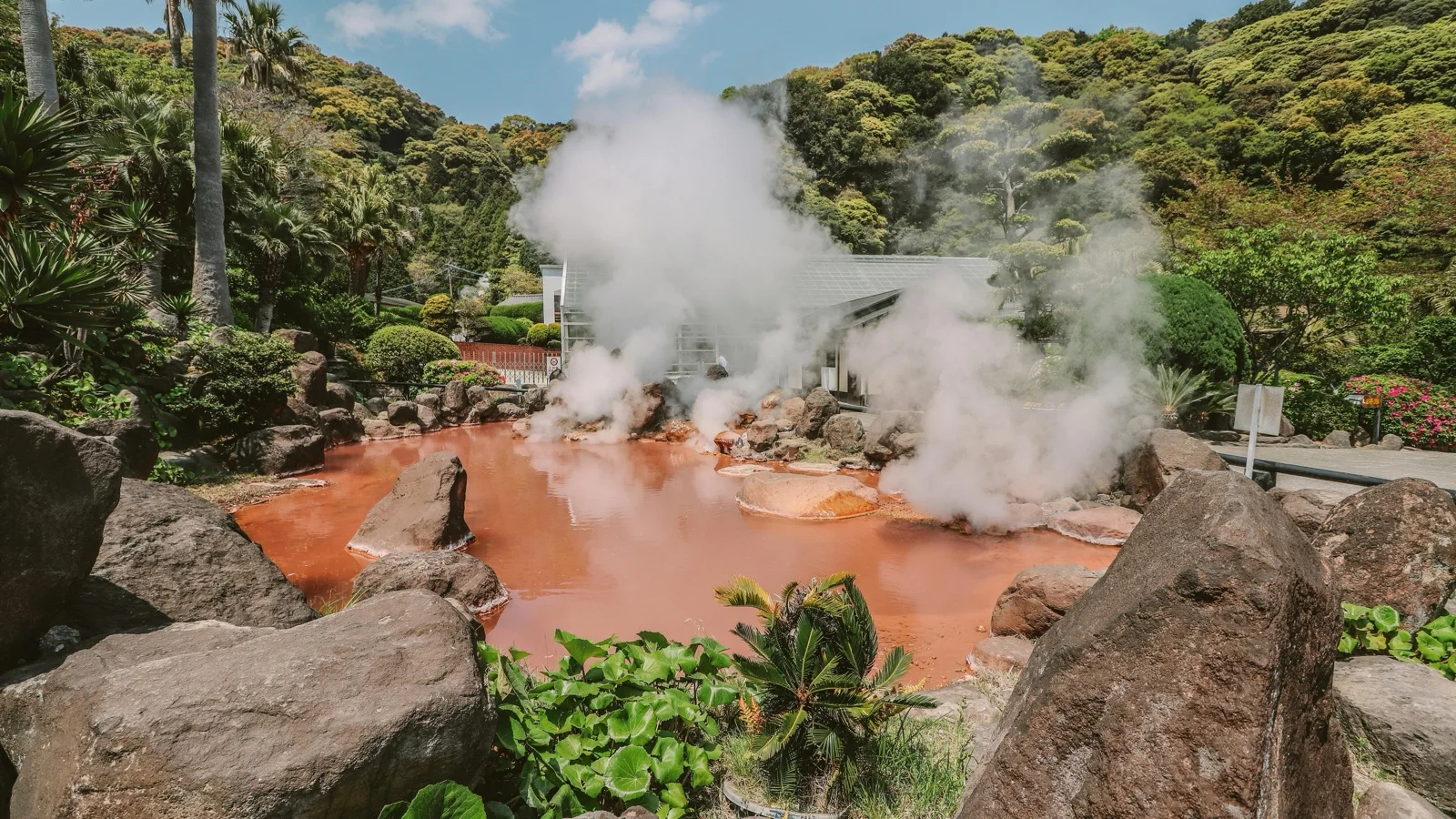
Chinoike Jigoku is Japan's oldest documented Hell, a large pond of blood-red hot mud that's been doing its thing for over thirteen centuries. The red comes from dissolved iron in the thermal water, real iron oxide, not algae or dye, and in morning light the rust-orange color is genuinely unsettling.
This one's in the separate Shibaseki district, not Kannawa, so you'll need a short bus ride. That also means smaller crowds, because it doesn't get the Kannawa tour bus circuit. The souvenir shop sells Blood Pond Ointment, a skin remedy made from the hot spring mud, which is either a great gift or a hard thing to explain at customs.
Tip: Take a bus from Beppu Station to Shibaseki to reach Japan's oldest Blood Pond Hell. The red-orange waters are most vivid in morning light before the crowd builds.
Tatsumaki Jigoku
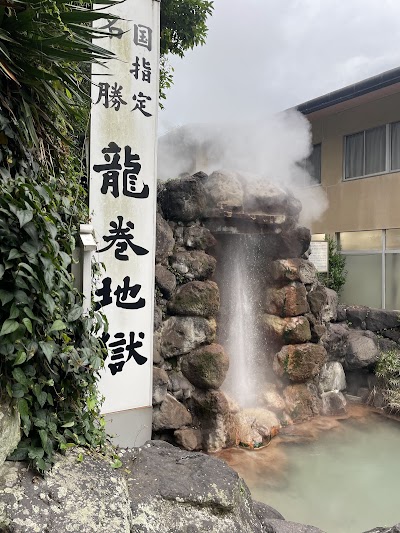
Right next door is Tatsumaki Jigoku, the only geyser in the Seven Hells. It erupts roughly every thirty to forty minutes, and timing your visit matters more here than anywhere else. You hear a low whirring build before the eruption, then hot water shoots skyward until a stone plate above the vent stops it from going too high. Exciting, but someone clearly made a safety call.
Ask the staff at the gate for the next eruption time, because showing up right after one means a long wait with nothing to watch. There's a short trail up the forested slope behind the geyser that's a surprisingly nice way to fill that wait. You're in Shibaseki anyway, because Chinoike is a two-minute walk away.
Tip: The geyser erupts every 30-40 minutes. Check the schedule at the gate so you time your visit. A short walk from Chinoike Jigoku makes pairing them easy.
Takegawara Onsen
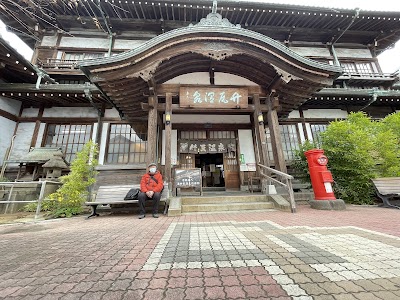
Back in central Beppu, Takegawara Onsen is a wooden bathhouse from 1879 where you can soak for almost nothing or pay a bit more to get buried in naturally heated sand. The sand bath is exactly what it sounds like. You lie down and an attendant shovels hot black sand over you until only your head sticks out, and you just lie there, immobilized and sweating, for ten or fifteen minutes.
The interior smells like hinoki cypress and sulfur, and the whole experience sits somewhere between spa treatment and being buried alive in a building that's been operating for nearly a hundred and fifty years. Book the sand bath ahead of time because weekend slots fill fast. The regular bath is walk-in and open until late, but the sand bath shuts down at nine thirty.
Tip: Book the sand bath in advance as slots fill quickly on weekends. The wooden bathhouse dating back to 1879 offers soaking for just 300 yen. Bring cash for entry.
Day 3
Day three goes up a mountain to see the whole steaming city from above, then comes back down to cook lunch with a volcano and end with the best bathhouse in town.
Beppu Ropeway
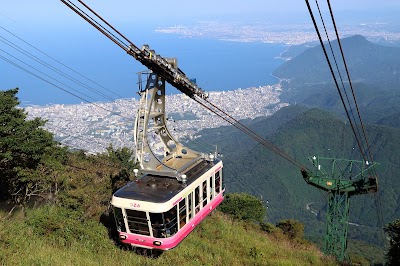
After two days at ground level watching steam rise, the Beppu Ropeway takes you up Mount Tsurumi and suddenly the whole picture clicks. You can see steam rising from scattered points across the entire city. The cable car climbs from five hundred meters to nearly fourteen hundred, and on a clear morning the view stretches across Beppu Bay to the Kuju mountain range.
The summit can be ten to fifteen degrees colder than the city below, so bring a layer. There's also a small onsen at the top if you want to soak with a view. Go on a clear day, because clouds will erase the entire reason you came up here, and check conditions before you head out since high winds can shut the ropeway down.
Tip: Purchase a round-trip ticket at the base station for Mount Tsurumi's 360-degree panoramas. Layer up as the summit at 1,375 m can be significantly colder than the city below.
Jigokumushikobo Kannawa
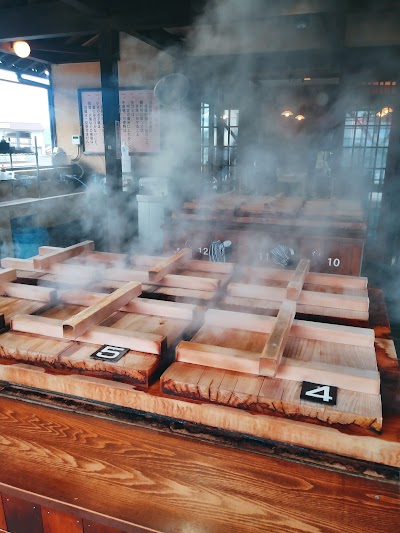
Jigokumushikobo in Kannawa is where you stop watching the Hells and start using them. You rent a steam box, buy raw ingredients from the on-site market, and cook everything with ninety-eight-degree geothermal steam. Locals have been steaming food this way since the Edo period, using the same volcanic system that powers the Hells you've been sightseeing for two days.
The communal kitchen fills up by noon on weekends, so get there early. Don't overbuy, because steam cooking is efficient and you'll be full faster than you expect. Opening your steam box after fifteen or twenty minutes to find everything perfectly cooked is genuinely satisfying, even if you're standing next to strangers doing the exact same thing with cabbage and a volcano.
Tip: Reserve a steaming box and pick up fresh ingredients at the on-site market. The communal kitchen fills by noon so arrive early for the best cooking spots.
Hyotan Onsen
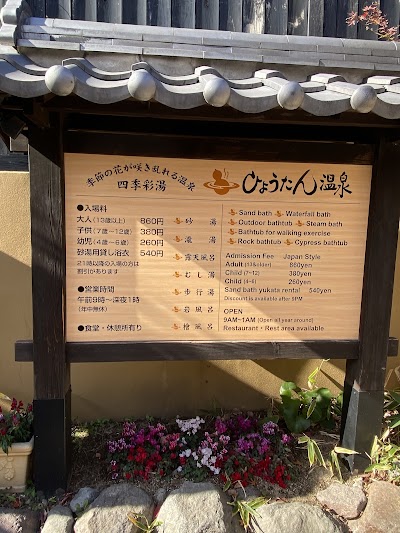
Hyotan Onsen is where the trip ends: a Michelin three-star public bathhouse with outdoor baths, waterfall massage, steam rooms, and a sand bath, all in one building in Kannawa. The waterfall stations pound hot water onto your shoulders like a massage therapist with a grudge, and the outdoor baths in cool evening air are exactly what onsen towns are built for.
Do the sand bath first. It's milder than Takegawara's because it's heated by steam rather than direct thermal heat, so you can stay buried longer without feeling cooked. Then shower off and hit the regular baths. It's Kannawa's most popular bathhouse and the sand bath has limited capacity, so factor in wait time and budget a couple hours, because rushing a Michelin-starred soak would defeat the whole point of coming here.
Tip: Prebook the sand bath treatment as it is the most popular experience here. The outdoor baths stay warm into the evening, perfect for soaking after a full day of sightseeing.
What to book ahead
- Reserve Takegawara Onsen sand bath slot (2-3 days before) - Weekend slots sell out; call or ask your hotel concierge to book.
- Book Hyotan Onsen sand bath (1-2 days before) - The sand bath is the most popular experience — prebook to avoid a long queue.
- Purchase Beppu Hells combined ticket (On arrival at first hell) - A two-day pass covering multiple hells is better value than individual entry if visiting three or more.
- Check Suginoi Hotel bath availability (Day of visit) - The outdoor bath terrace is weather-dependent and may have reduced hours in winter.
What to pack
Essentials
- Swimsuit - Required for mixed-gender baths at Suginoi Hotel and some sand bath facilities.
- Small towel - Essential for onsen etiquette — used for modesty and drying; many bathhouses sell them.
- Slip-on shoes - You will remove shoes frequently at bathhouses, temples, and restaurants.
- Cash in small bills - Many hell entrances, food stalls, and smaller bathhouses are cash-only.
Nice to have
- Yukata - Enhances the onsen town experience and many ryokans provide one for guests.
- Thermal layer - Useful for the Mount Tsurumi summit which can be 10-15 degrees cooler than the city.
- Waterproof phone pouch - Handy for sand bath sessions and outdoor onsen where splashing is common.
Final take
Three days in Beppu and you'll understand why this place has the most hot spring output in Japan. You'll have stared at it, eaten from it, cooked with it, and soaked in it until the geothermal system feels like a travel companion.
Plan this trip
Turn this guide into an editable trip plan
Open the route in Instaboard, adjust the stops, and share the itinerary with your travel group.